
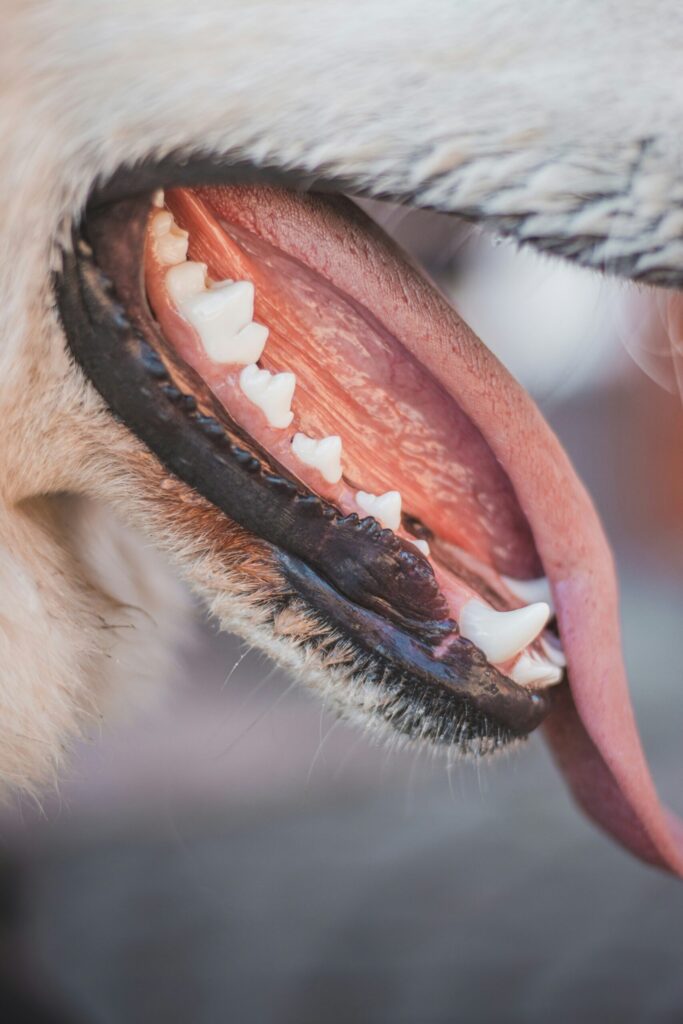
Pet Dental Health Month: Why It Matters
February isn’t just about love and hearts and chocolate – it’s also Pet Dental Health Month, which is important because your pet’s mouth plays a huge role in their overall health. Dental disease is one of the most common (and most overlooked) issues in dogs and cats, and the tricky part is that it often hides in plain sight. In fact, over 80% of dogs and over 70% of cats will have some form of dental disease by age 3.1
Read on to find out why dental health matters, what signs to watch for, and what you can realistically do at home – without guilt, fear-mongering, or assuming you’re brushing your cat’s teeth twice a day (which is very impressive if you are).
Why Dental Health is About More than Bad Breath
A little stinky breath is normal. Persistent, foul breath is not. Most dogs and cats do have some degree of dental disease, and it usually starts as plaque and tartar buildup, but over time it can lead to:
- Gum inflammation and pain
- Tooth loss
- Oral infections
- Bacteria entering the bloodstream, potentially affecting the heart, liver, and kidneys
Dental disease doesn’t just stay in the mouth, it can quietly impact your pet’s comfort, appetite, and long term health.
Signs Your Pet May Have Dental Disease
Pets are very good at hiding pain, especially when it comes to their mouths. Some signs are obvious, others are subtle.
Common signs include:
- Bad breath that doesn’t improve
- Red, swollen, or bleeding gums
- Yellow or brown buildup on teeth
- Dropping food, chewing on one side, or eating more slowly
- Pawing at the mouth or face
- Decreased appetite or avoiding hard food
- Changes in behaviour (irritability, withdrawal)
If you’re noticing any of these, it’s worth bringing them up at your pet’s next vet visit or sooner if the changes are significant.
The Myth of “They’re still eating, so their mouth must be fine”
One of the biggest misconceptions about dental pain is that pets will stop eating if their mouth hurts. In reality, many pets continue to eat despite significant oral pain, because instinct tells them to. Eating doesn’t mean they’re comfortable, it just means they’re coping.
What You Can Do At Home (Realistically)
Dental care doesn’t have to be all or nothing. Anything you do consistently is better than nothing and thankfully some of these options don’t involve wrestling your cat with a toothbrush!
Helpful at home options include:
- Tooth brushing with pet-safe toothpaste (the gold standard, but not the only tool)
- Dental diets or treats approved for oral health
- Dental chews appropriate for your pet’s size and chewing style
- Water additives or oral gels (as a supplement, not a replacement)
If brushing isn’t happening right now, that’s okay. Start where you can.
Why Professional Dental Care Matters
At home care helps slow dental disease but it cannot remove tartar below the gum line. That’s where professional dental cleanings come in.
A veterinary dental cleaning allows for:
- Full evaluation of the teeth and gums
- Full mouth dental X-rays to assess what’s happening below the surface
- Safe removal of tartar and infected teeth if needed
Delaying dental care often leads to more pain, more extractions, and higher costs down the line.
Prevention is Kinder (and Usually Cheaper)
Routine dental care can improve your pet’s comfort and overall quality of life, help prevent chronic pain and infection, reduce the risk of systemic illness, and even save money over time by avoiding advanced disease and more intensive treatments. Dental health isn’t about perfection, it’s about progress and prevention.
A Reminder (Without the Guilt)
Pet Dental Health Month isn’t about shaming you if you are not brushing your pets teeth everyday (or ever). It’s a reminder to just take a peek in your pet’s mouth, notice what’s changed, and ask questions. If it’s been a while since your pet’s teeth were checked, February is a great time to call your vet and start the conversation. Many vets even offer discounted procedures during the month of February! Your pet doesn’t need perfect teeth, they just need a mouth that doesn’t hurt.
Sources
1. Wiggs RB, Lobprise HB. Periodontology. In: Veterinary Dentistry: Principals and Practice. Philadelphia: Lippencott-Raven; 1997:186-231